Joshua Tlatelpa-Agustin
Whoami
Hello! I'm Joshua Tlatelpa-Agustin, a PhD student in Computer Science at the University of British Columbia. My research focuses on improving system performance and security by analyzing and optimizing the interactions between hardware and software. I'm co-advised by Dr. Aastha Mehta and Dr. Arpan Gujarati.
Education
Ph.D. Computer Science, University of British Columbia. Vancouver, British Columbia. Expected 2030.
M.S. Computer Science (Thesis), University of Utah. Salt Lake City, Utah. May 2026.
B.S. Computer Science, University of Utah. Salt Lake City, Utah. 2024.
Research Interests
I'm interested in high-performance computing, operating systems, and computer architecture, with a focus on how low-level system design can improve both efficiency and security. My current research explores optimizing system performance at the boundary between hardware and software, including techniques for memory subsystem optimization, compiler-driven performance tuning, capability-based security in modern OS kernels, and efficient trusted execution for high-throughput workloads.
Publications
- Zhaofeng Li, Jerry Zhang, Joshua Tlatelpa-Agustin, Xiangdong Chen, and Anton Burtsev. Understanding the Security Impact of CHERI on the Operating System Kernel. In Proceedings of the Annual Computer Security Applications Conference (ACSAC), December 2025.
- Jerry Zhang, Joshua Tlatelpa-Agustin, and Anton Burtsev. DRAMHiTv2: Towards the fastest hash table operating at the speed of DRAM. Under review. (Title modified for anonymity.)
Research Projects
- TEEs: Characterizing and reducing the performance costs of trusted execution environments (TEEs) for high-throughput workloads, as sensitive data moves between CPUs, GPUs, and other accelerators on edge platforms. Ongoing work at UBC.
- CHERI: Study of 440 Linux and FreeBSD kernel vulnerabilities, showing that capability-based memory protection (CHERI) can prevent approximately 60% of identified vulnerabilities, including most privilege escalations.
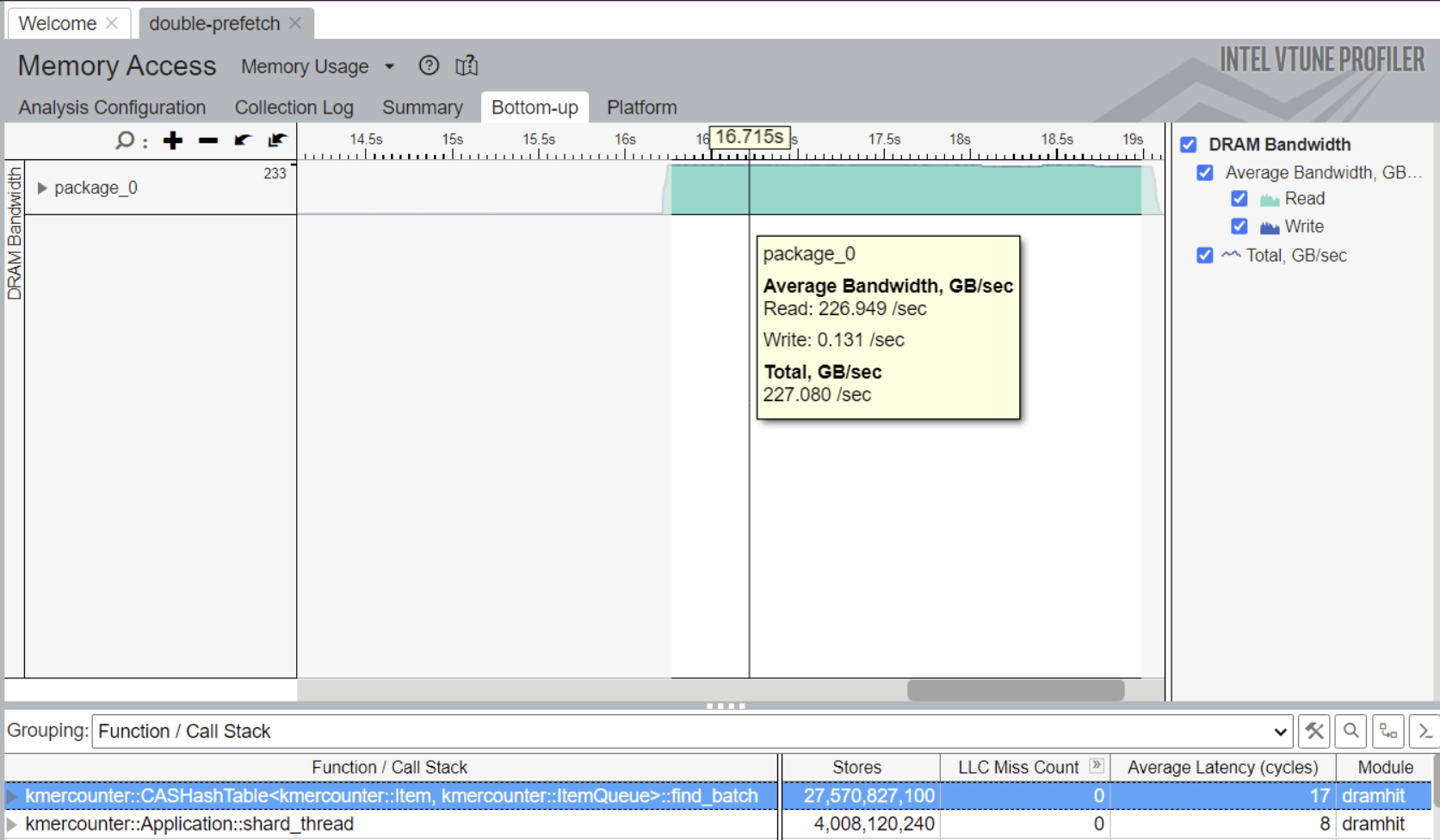
- DRAMHiTv2: Designed DRAMHiTv2, a next-generation in-memory hash table that reaches hardware bandwidth limits and maximizes operational throughput through a multi-level prefetching scheme, a compute-memory-aware table layout, and a conflict-resolution strategy optimized for memory bandwidth utilization. We achieve 3,200-5,000 million operations per second (Mops) for lookups and 2,150-2,800 Mops for insertions depending on fill factor, making it the fastest hash table to date (faster than DRAMHiT).
Contact
Email: joshta@cs.ubc.ca
Publications: DBLP